
The World's Busiest Shipping Lanes: Strategic Arteries of Global Trade - PART 1
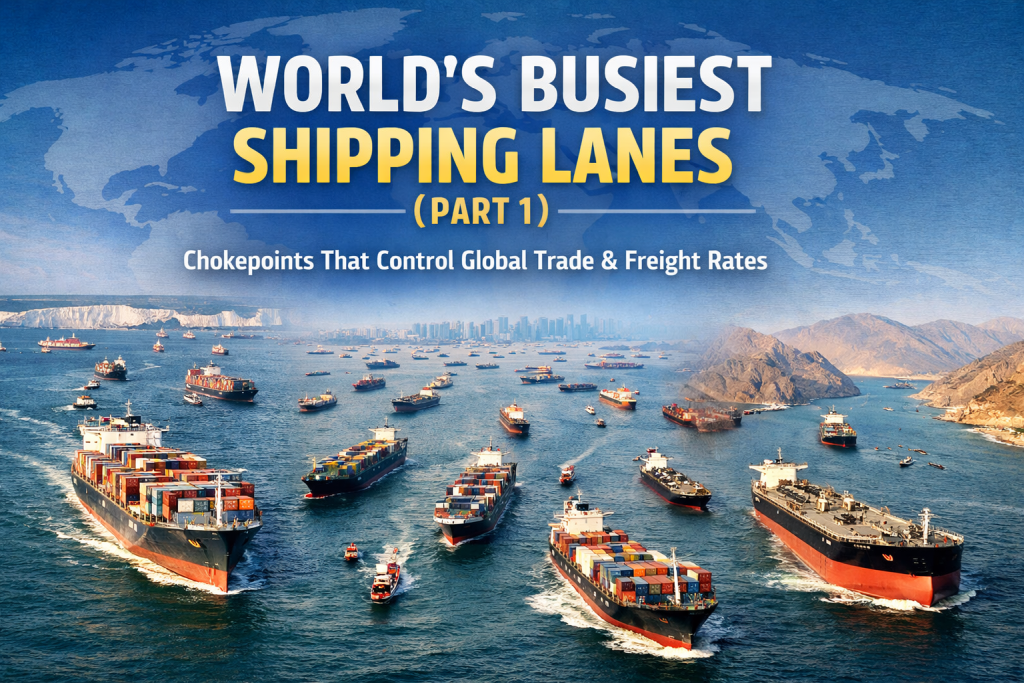
Part 1: The English Channel | The Malacca Strait | The Strait of Hormuz
Global trade depends heavily on a few critical maritime corridors that act as lifelines for international commerce. Among them, the English Channel, the Strait of Malacca, and the Strait of Hormuz stand out as some of the busiest and most strategically important shipping lanes in the world.
These routes are essential to container shipping solutions, global freight logistics, and the seamless functioning of the container supply chain. But what exactly flows through them—and what happens if they are disrupted?
1. The English Channel: The World's Busiest Gateway
The English Channel, particularly the Dover Strait, is one of the busiest maritime routes in the world, handling dense traffic between the UK and mainland Europe.
Cargo & Vessel Movement
Containerized cargo including consumer goods and automotive parts
Roll-on/roll-off (RoRo) vessels transporting vehicles
Bulk cargo and short-sea shipping vessels
Feeder container ships supporting regional trade
Logistics Significance
The route is central to European intermodal transport and multimodal logistics, connecting ports with inland networks such as containerized rail freight and road transport. It plays a key role in maintaining efficient containerized cargo management and regional container fleet management.
If Passage Stops: Global Impact
Immediate disruption in UK–Europe trade flows
Delays in domestic container transport and cross-border logistics
Increased congestion and rerouting costs
Impact on global freight logistics and supply chain timelines
2. The Strait of Malacca: The Artery of Asia
The Strait of Malacca is one of the most important maritime chokepoints globally, linking the Indian Ocean with the South China Sea and Pacific markets. It is estimated that around 25–30% of global trade passes through this route.
Cargo & Vessel Movement
High-volume container ships carrying mixed containerized cargo
Crude oil tankers and LNG carriers
Bulk carriers transporting raw materials
Chemical cargo via ISO tank containers
Logistics Significance
This route is vital for international trade containers, supporting high-volume container shipping solutions between Asia, the Middle East, and Europe. It plays a key role in container tracking and monitoring and overall container supply chain efficiency.
If Passage Stops: Global Impact
Severe disruption in Asia–Europe and intra-Asia trade
Rerouting via longer alternatives (e.g., Lombok Strait), increasing cost and time
Supply chain bottlenecks in major manufacturing hubs
Challenges in freight cost optimization and delivery reliability
3. The Strait of Hormuz: The Energy Lifeline - Ongoing Crisis
The Strait of Hormuz is one of the most strategically critical maritime routes, particularly for global energy supply. A significant portion of the world’s oil exports - estimated at around 20% of global petroleum liquids consumption - passes through this narrow corridor.
Cargo & Vessel Movement
Crude oil transported via Very Large Crude Carriers (VLCCs)
LNG carriers supplying global energy markets
Refined petroleum products
Limited containerized cargo supporting regional trade
Logistics Significance
While primarily energy-focused, the strait remains essential to global economic stability and indirectly impacts container shipping solutions and global freight logistics, as fuel costs influence shipping economics worldwide.
If Passage Stops: Global Impact
Immediate spike in global oil and energy prices
Increased shipping and logistics costs across industries
Disruptions in manufacturing and transportation sectors
Pressure on sustainable container solutions and cost structures
Conclusion: Securing the Foundations of Global Trade
The English Channel, Strait of Malacca, and Strait of Hormuz are vital to maintaining the efficiency and resilience of global trade. These routes enable the seamless movement of container shipping solutions, strengthen the container supply chain, and support the global flow of goods and energy.
VS&B Containers Group understand these chokepoints and helps in:
Strategic container buying and selling
Efficient shipping container leasing
Ensuring container security and safety
Enhancing shipping container durability and operational planning
As global trade grows and digitization in container shipping advances, safeguarding these maritime corridors becomes increasingly critical for sustainable and resilient supply chains.
VS&B Containers group offers both standard and custom-made containers, delivered directly from the factory to your desired location. With a fleet of over 25,000 containers made available across Asia, Europe, US and Australia, the company helps customers get containers effortlessly from anywhere in the world. If you have unique needs in terms of affordability, adaptability, and potential return on investment, please drop an email to traders@vsnb.com, and the VS&B team will contact you to discuss further.
- Log in to post comments