
DNV Containers: A Complete Guide to Their Purpose, Standards, and Applications
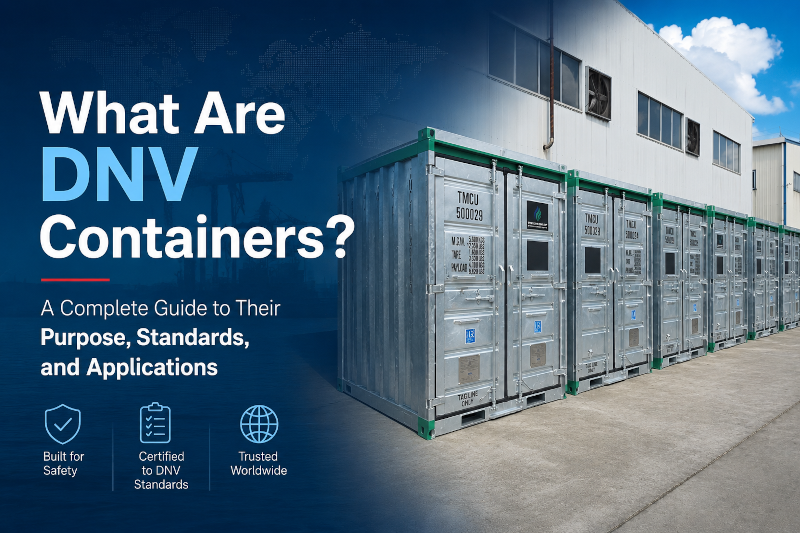
When it comes to offshore and marine operations, not just any shipping container will do. Equipment operating in harsh, high-risk environments - from oil rigs in the North Sea to wind farms in the Atlantic - must meet the most stringent safety and structural standards available. That's where DNV containers come in.
What Are DNV Containers?
DNV containers are offshore cargo containers certified to the standards set by DNV (Det Norske Veritas), one of the world's leading classification societies for maritime and offshore risk management. Originally founded in Norway in 1864, DNV has become a globally recognized authority in safety, quality, and risk management across the energy, maritime, and industrial sectors.
DNV 2.7-1 is the primary standard for offshore containers, defining minimum requirements for design, fabrication, testing, and inspection. A DNV-certified container has been independently verified to withstand the extreme mechanical, structural, and environmental stresses associated with offshore lifting and handling operations - including dynamic loading from crane lifts, wave action, and vessel movements.
These are specialized shipping containers engineered far beyond standard ISO shipping container specifications. They are built to survive, and to keep personnel and assets safe.
Why Is DNV Certification Required?
Offshore and marine environments present some of the most demanding conditions in global freight logistics. Containers used in these settings face risks that standard intermodal transport containers are simply not designed to handle:
Dynamic crane lifts from vessel to platform and back
Exposure to saltwater, high humidity, and corrosive marine atmospheres
Extreme temperature variations and UV degradation
Heavy wave-induced vessel motion and mechanical shock
Regulatory requirements from international maritime authorities
Without DNV certification, a container used in settings could structurally fail - putting cargo, equipment, and human lives at serious risk. For offshore lifting, many operators, project specifications, insurers, and local regulatory regimes require offshore containers certified to DNV 2.7-1 or an equivalent accepted offshore container standard.
Industries That Use DNV Containers
DNV containers serve a wide range of high-demand, safety-critical industries. Each relies on the certified structural integrity of these units to transport equipment, tools, hazardous materials, and supplies in environments where failure is not an option.
1. Offshore Oil & Gas
The offshore oil and gas industry is the largest user of DNV-certified containers. Platforms and FPSOs (Floating Production Storage and Offloading vessels) require regular supply runs of tools, chemicals, spare parts, and consumables. DNV containers are used for hazardous cargo container shipping, including chemicals and pressurized equipment, where strict compliance with container security and safety standards is non-negotiable.
2. Offshore Renewable Energy
The rapid expansion of offshore wind, tidal, and wave energy projects has created enormous demand for DNV containers. Installation and maintenance vessels deploy these containers to transport turbine components, cables, and technical equipment to offshore wind farms. Sustainable container solutions that meet DNV standards are increasingly vital to the renewable energy supply chain.
3. Marine and Vessel Operations
Naval vessels, research ships, and commercial marine operators use DNV containers to safely store and transport containerized cargo management systems, scientific instruments, and operational equipment. The containers must withstand constant motion, saltwater exposure, and deck-level mechanical stress.
4. Subsea and Diving Operations
Subsea engineering contractors use DNV containers to house diving equipment, remotely operated vehicles (ROVs), and life support systems. These containers often serve as workstations or equipment storage units directly on offshore platforms, demanding the highest levels of shipping container durability.
5. Defence and Government
Military and government maritime operations require specialized shipping containers that can be rapidly deployed and retrieved under demanding operational conditions. DNV certification ensures these containers meet international safety standards regardless of deployment location.
6. Port and Terminal Operations
With growing port automation and container handling technology, ports are increasingly deploying DNV containers for tool storage, electrical equipment housing, and maintenance operations. The standards ensure compatibility with crane operations and heavy lifting in busy terminal environments.
Key Design and Safety Features of DNV Containers
DNV containers are not standard ISO containers with a certification sticker. They are purpose-engineered to the DNV 2.7-1 standard and incorporate a range of structural and safety features that distinguish them from conventional intermodal transport containers.
Structural Integrity and Load Ratings
DNV containers are designed with reinforced corner castings, heavy-gauge steel frames, and load-tested lifting points. Unlike standard containers, they are rated for dynamic loads - meaning they can absorb the shock and vibration forces generated during offshore crane lifts. Every container is tested and marked with its maximum gross weight and the applicable DNV certification number.
Certified Lifting Equipment
All lifting points -
Pad eyes, lifting-set interfaces, fork pockets, and other load-path structural elements must comply with the applicable DNV 2.7-1 design, material, manufacturing, testing, inspection, and marking requirements. ISO corner fittings, if fitted, are not to be used for offshore lifting.
Corrosion-Resistant Coatings
Marine and offshore environments are aggressively corrosive. DNV containers feature multi-layer marine-grade paint systems, hot-dip galvanized components where applicable, and corrosion-resistant hardware. This ensures shipping container durability across multi-year operational cycles at sea.
Custom Modifications and Configurations
One of the most valuable features of DNV containers is their adaptability. Where modifications include powered equipment, hazardous-area electrical systems, fire and gas detection, HVAC, personnel occupancy, or operational service functions, additional requirements such as DNV 2.7-2 may apply in addition to DNV 2.7-1.
Rigorous Inspection and Documentation
Each DNV 2.7-1 offshore container should have traceable certification documentation covering design verification, prototype and production inspection/testing, marking/plating, and periodic inspection records. Periodic inspection includes annual visual inspection and more detailed inspection/NDT at prescribed intervals, with additional testing and recertification requirements after substantial repairs, alterations, or modifications affecting structural integrity.
Benefits of Using DNV-Certified Containers
DNV-certified containers provide uncompromised safety through independent third-party verification, ensuring reliable performance in demanding offshore environments while protecting personnel, cargo, assets, and the environment. They help operators meet regulatory requirements, reduce insurance and liability risks by demonstrating due diligence, and offer exceptional versatility across road, rail, and sea transport. Built with robust, corrosion-resistant materials for long-term durability, these containers provide a cost-effective solution over extended project lifecycles and can be customised for specialised offshore applications while maintaining DNV certification standards.
Conclusion
DNV containers represent the gold standard in offshore and marine container safety. Their certification to the DNV 2.7-1 standard provides documented assurance of structural integrity, lifting safety, and operational durability in the harshest environments on earth.
From offshore oil and gas platforms to renewable energy installations, from subsea operations to naval deployments, DNV containers are the foundation of safe and efficient containerized cargo management. For any operation that involves offshore lifting, marine logistics, or hazardous cargo container shipping, DNV certification is not just best practice - it's essential.
To learn more about DNV container solutions from VS&B Containers Group, or to discuss your specific project requirements, contact our team today.
VS&B Containers group offers both standard and custom-made containers, delivered directly from the factory to your desired location. With a fleet of over 25,000 containers made available across Asia, Europe, US and Australia, the company helps customers get containers effortlessly from anywhere in the world. If you have unique needs in terms of affordability, adaptability, and potential return on investment, please drop an email to traders@vsnb.com, and the VS&B team will contact you to discuss further.
- Log in to post comments