
How Rising Fuel Costs Impact Ocean Freight and Container Logistics
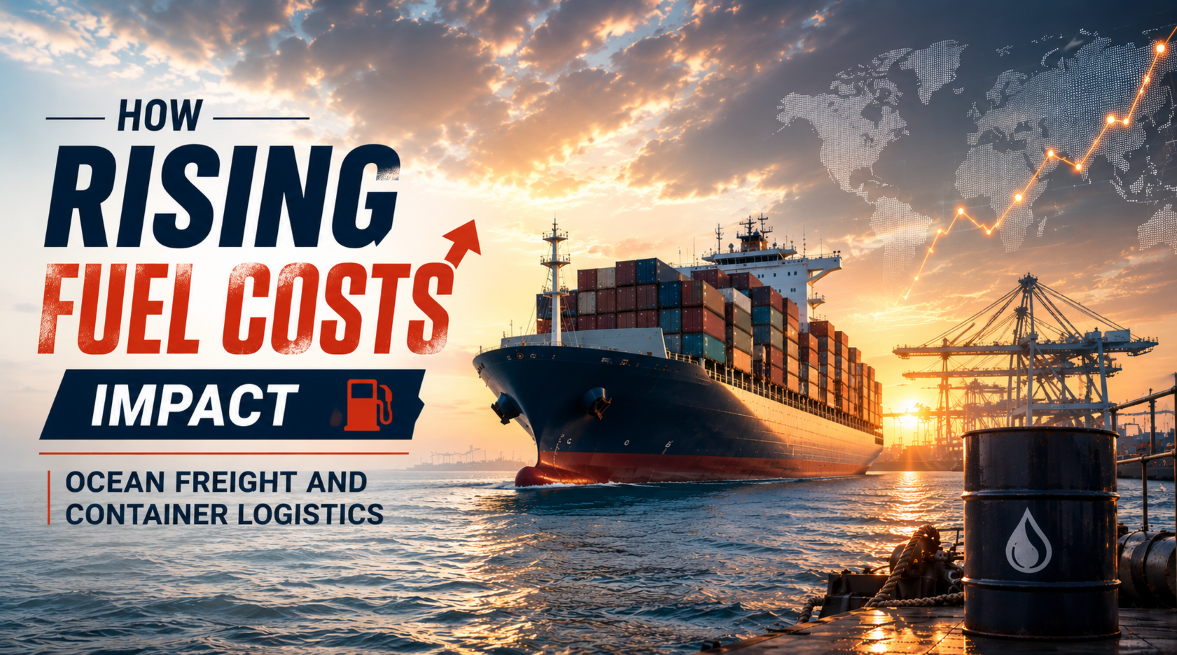
The maritime industry is facing a familiar yet intensifying challenge: volatile and rising fuel prices. Because bunker fuel represents the single largest variable cost in vessel operations - often accounting for 50–60% of variable expenses - price fluctuations shake the entire global trade network. For businesses managing tight supply chains, understanding how rising energy costs alter the landscape is critical for staying competitive.
Here is a look at how surging fuel costs ripple through ocean freight operations, and how industry stakeholders are adjusting to stay afloat.
The Domino Effect on Shipping Operations
When fuel prices climb, ocean carriers cannot simply absorb the financial hit. Instead, they pass these expenses down the line through a mechanism known as the Bunker Adjustment Factor (BAF) - a floating fuel surcharge applied on top of base freight rates.
To mitigate costs, carriers frequently turn to an operational tactic called slow steaming. By reducing vessel speeds, ships burn significantly less fuel. However, this fuel-saving measure directly extends transit times, creating predictable downstream challenges:
Delayed arrivals at destination ports
Disrupted manufacturing and production schedules
Inventory stockouts for businesses reliant on tight just-in-time timelines
Impact on Container Fleets and Equipment Choices
Rising fuel costs also shift how companies approach asset management. Maximizing cargo volume per voyage becomes a top priority to ensure strong TEU (Twenty-foot Equivalent Unit) efficiency and cost-per-unit economics.
Shippers increasingly favor specialized equipment that reduces the number of trips required or handles cargo requirements more effectively. For high-volume goods, high cube containers - primarily 40’HC and 45’HC - are used to maximize vertical space beyond the standard 8’6” container height. Open top containers accommodate oversized or crane-loaded cargo, while flat rack containers are the go-to solution for heavy machinery and out-of-gauge shipments.
Temperature-sensitive goods continue to rely heavily on reefer containers to protect perishables across extended transit times. Any loss of efficiency in reefer logistics directly impacts the bottom line. For liquid bulk cargo, ISO tank containers offer a safe, standardized option that streamlines loading and unloading operations, reducing costly port dwell time.
The Shift Toward Multimodal Networks
As ocean freight rates rise due to fuel surcharges, dependence on a single mode of transport becomes a financial liability. Logistics providers are re-engineering routes through intermodal and multimodal strategies that blend sea, rail, and road transport.
By linking ocean legs with containerized rail freight and domestic truck transport, companies can sidestep high-cost long-haul trucking lanes while maintaining reliable delivery windows. This approach reduces overall energy consumption across the supply chain and builds resilience against future rate shocks.
Embracing Innovation and Sustainability
To weather prolonged periods of high fuel prices, the industry is investing heavily in modernization. Key priorities include:
Digitization in container shipping: Advanced software platforms for real-time container tracking, load optimization, and port turnaround planning - reducing costly empty repositioning moves.
Port automation and container handling: Streamlined terminal operations that minimize vessel idle time at berth, directly cutting fuel burn.
Sustainable shipping solutions: Alternative fuels (LNG, methanol, ammonia), eco-friendly hull designs, and longer-lasting container assets that reduce the total carbon footprint and long-term operational costs.
Through data-driven cargo management and proactive freight cost optimization, businesses can transform fuel volatility from a crisis into a catalyst for operational excellence.
Partnering for Strategic Resilience with VS&B Containers
Surging fuel costs demand more than reactive budget adjustments - they require a flexible, forward-thinking approach to container procurement and asset management.
VS&B Containers Group is a trusted provider of comprehensive container solutions across Asia and Europe. Serving hundreds of businesses globally with a broad fleet of marine containers, VS&B specializes in the buying and selling of new and used containers, as well as flexible leasing options tailored to operational needs.
Whether your operations require standard dry freight boxes, specialized equipment, or custom container modifications, VS&B ensures strong asset availability across a global depot network. Backed by decades of maritime expertise, VS&B partners with NVOCCs, freight forwarders, and domestic shippers to build cost-optimized supply chains capable of navigating any market condition.
VS&B Containers group offers both standard and custom-made containers, delivered directly from the factory to your desired location. With a fleet of over 25,000 containers made available across Asia, Europe, US and Australia, the company helps customers get containers effortlessly from anywhere in the world. If you have unique needs in terms of affordability, adaptability, and potential return on investment, please drop an email to traders@vsnb.com, and the VS&B team will contact you to discuss further.
- Log in to post comments