
DNV Containers vs. Standard ISO Shipping Containers: Key Differences You Should Know
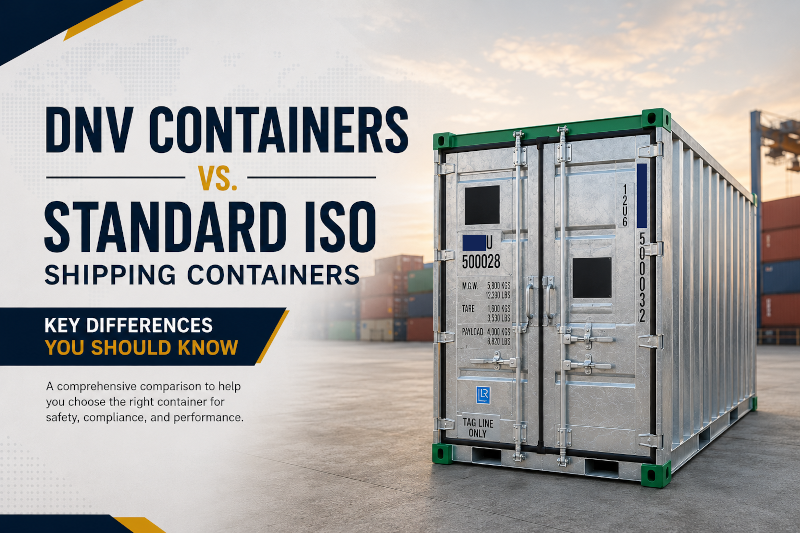
Choosing the right container for your operation isn't always straightforward. For most businesses involved in container shipping solutions and standard global freight logistics, a conventional ISO shipping container is entirely sufficient. But for operators working in offshore, marine, or high-risk environments, selecting the wrong container type can have serious safety, legal, and financial consequences.
This guide breaks down the core differences between DNV containers and standard ISO shipping containers - covering design, structural specifications, testing, certification, and practical use cases - so you can make the right decision for your project.
The Standards That Define Each Container Type
ISO Containers: Built for Global Trade
Standard shipping containers are governed by the International Organisation for Standardisation (ISO), primarily under ISO 668. These standards define the dimensions, corner casting positions, stacking strengths, and structural requirements that allow containers to move seamlessly across international trade containers networks - from ship to rail to road.
ISO containers are the backbone of TEU capacity and efficiency in global shipping. Their standardisation means they can be handled by virtually any crane, chassis, or vessel worldwide, making them ideal for intermodal transport and multimodal logistics. The 20-foot and 40-foot standard sizes, along with high cube containers (40'HC, 45'HC, 20'HC), dominate global container fleet management.
DNV Containers: Built for Offshore Safety
DNV containers are certified to DNV 2.7-1 - the offshore container standard developed by DNV (Det Norske Veritas) and widely adopted across the offshore energy, marine, and subsea sectors. This standard specifies requirements for design, fabrication, materials, lifting equipment, testing, and periodic inspection that go significantly beyond anything in the ISO framework.
The DNV 2.7-1 standard is supplemented in some regions by EN 12079 (the European equivalent) and is recognised by classification societies including DNV, Bureau Veritas, and Lloyd's Register. While ISO standards are about interoperability across global container supply chains, DNV standards are about survivability in extreme environments.
Design and Structural Differences
Steel Grade and Construction
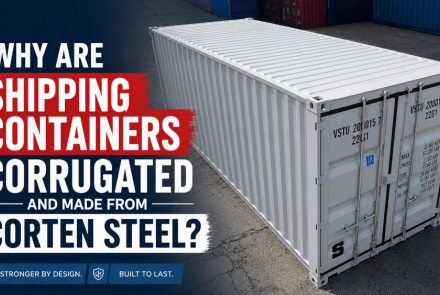
Standard ISO containers are built from Corten (weathering) steel, selected for its corrosion resistance in general transportation environments and its cost-effectiveness at scale. Wall thicknesses are optimised for stacking loads and the lateral forces encountered in intermodal transport - not for the dynamic shock loads of offshore crane operations.
DNV 2.7-1 containers use materials and structural members selected and verified for offshore lifting loads, impact toughness, weldability, traceability, and environmental suitability, with critical load-path members designed to meet DNV strength and testing requirements.
Lifting Points and Load Ratings
This is one of the most significant structural differences between the two container types and one that has direct safety implications.
Standard ISO freight containers rely on ISO corner fittings for intermodal handling and securing, but those fittings must not be used for offshore lifting. DNV 2.7-1 offshore containers are lifted individually using a certified lifting set connected to dedicated pad eyes, with the container and lifting arrangement verified through DNV design, material, manufacturing, testing, marking, and inspection requirements.
DNV 2.7-1 prototype testing includes an all-point lifting test at 2.5 times the rating and, for four-pad-eye containers, a two-point diagonal lifting test at 1.5 times the rating.
ISO corner fittings must not be used for offshore lifting. DNV offshore containers are lifted via the certified lifting set and pad eye arrangement, not by ISO 1161 corner fittings.
Corrosion Protection
A standard ISO container's paint system is designed for general weathering and typical port environments. It offers reasonable protection for containers moving through standard container shipping solutions networks, but it is not formulated for the constant salt spray, high humidity, and corrosive atmospheric conditions found offshore.
DNV 2.7-1 requires offshore containers to be suitable for the offshore environment through construction, suitable materials, and/or corrosion and paint protection. Specific coating systems should be selected and documented for the intended environment.
Base and Floor Construction
ISO container floors are typically constructed from hardwood or bamboo decking on a steel underframe, designed to support the point loads generated by forklift handling in standard logistics environments. DNV container floors are typically steel-plated or fitted with specialist decking rated for heavier point loads, chemical resistance (critical for hazardous cargo container shipping), and the rigours of offshore handling equipment.
Testing and Certification Requirements
ISO Certification: Design Compliance
Standard ISO containers are type-tested - meaning a prototype is tested to ISO specifications and the design is approved. Production containers of that design are then manufactured to the same specification. Individual containers do not typically require independent third-party survey unless they are being used in regulated contexts such as dangerous goods transport under the IMDG Code. There is no mandatory periodic re-inspection requirement for standard ISO units in general commercial use.
DNV Certification: Individual Survey and Ongoing Compliance
DNV certification is fundamentally different - and significantly more rigorous:
DNV 2.7-1 Certification Process
|
DNV 2.7-1 certification includes design verification, prototype inspection/testing, production inspection/testing, plating and marking, and certificate issuance. Prototype lifting tests include all-point lifting at 2.5R and, for four-pad-eye containers, a diagonal two-point lifting test at 1.5R. Periodic inspection requirements include annual visual inspection and 48-month NDT/visual inspection, with additional requirements after substantial repairs or alterations.
Hazardous Cargo Requirements
For dangerous goods, additional regulations such as the IMDG Code may apply. Where the unit includes powered equipment, hazardous-area electrical systems, gas detection, ventilation shutdowns, or fire/gas interface functions, DNV 2.7-2 or other applicable offshore safety standards may also be required.
Typical Use Cases
When ISO Containers Are the Right Choice
Standard ISO containers are the workhorses of global trade. They are the right choice when:
Shipping goods via established container shipping solutions on standard trade lanes
Moving cargo by containerized rail freight or domestic container transport
Using reefer containers for lease in temperature-controlled supply chains
Storing goods in ports, warehouses, or on land
Transporting cargo where the container will not be crane-lifted offshore
Maximising TEU capacity and efficiency in high-volume shipping operations
Cost sensitivity is a primary procurement consideration
The vast majority of global freight logistics - from NVOCC operations to container buying and selling in commodity markets - relies on standard ISO containers. Their ubiquity, standardisation, and cost-efficiency make them unmatched for land-based and conventional maritime trade.
When DNV Containers Are Required
DNV containers become necessary - and in many cases legally mandatory - when:
DNV 2.7-1 assumes the offshore container is lifted individually by a crane hook attached to the top link of a certified lifting set, not by spreader beams or ISO corner fittings.
Containers will be deployed on offshore oil and gas platforms or FPSOs
Equipment must be transported to or from offshore wind, tidal, or wave energy installations
Hazardous materials or chemicals must be handled in marine or offshore environments
Subsea equipment, ROVs, or diving systems need containerised mobilisation
Insurance, operator, or regulatory requirements mandate certified offshore containers
Custom container modifications are needed for specialist offshore applications
When Should Businesses Choose a DNV Container Over a Standard ISO Container?
Choosing between a DNV-certified container and a standard ISO container depends on the operating environment, regulatory requirements, and acceptable level of risk. For offshore operations involving crane lifts, DNV certification is essential, as standard ISO containers are not designed for such conditions and often fail to meet mandatory industry regulations. While DNV containers may have a higher upfront cost, they significantly reduce safety, legal, and insurance risks while offering superior durability, longer service life, and easier compliance management. Their ability to support both offshore and multimodal transport also enhances asset utilisation and helps optimise overall project costs, making them the preferred choice for long-term offshore and marine applications.
Conclusion
DNV containers and standard ISO containers are not competing products - they are purpose-built solutions for different operational contexts. ISO containers are the foundation of global container shipping solutions, optimised for intermodal transport efficiency, global standardisation, and cost-effective freight movement. DNV containers are engineered for environments where standard containers would fail - offshore platforms, crane lifts, and marine operations where structural integrity is a matter of safety, not just compliance.
Understanding these differences is essential for any procurement professional, project manager, or logistics operator working at the intersection of land-based supply chains and offshore operations. The right container in the wrong environment is still the wrong container.
Whether you need a fleet of standard high cube containers for an international trade containers operation, or purpose-built DNV units for a deepwater energy project, VS&B Containers Group has the inventory, expertise, and global network to deliver.
VS&B Containers group offers both standard and custom-made containers, delivered directly from the factory to your desired location. With a fleet of over 25,000 containers made available across Asia, Europe, US and Australia, the company helps customers get containers effortlessly from anywhere in the world. If you have unique needs in terms of affordability, adaptability, and potential return on investment, please drop an email to traders@vsnb.com, and the VS&B team will contact you to discuss further.
- Log in to post comments