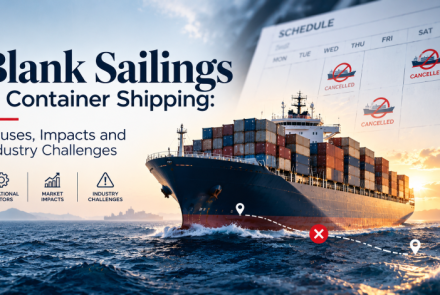

Blank Sailings in Container Shipping: Causes, Impacts and Industry Challenges
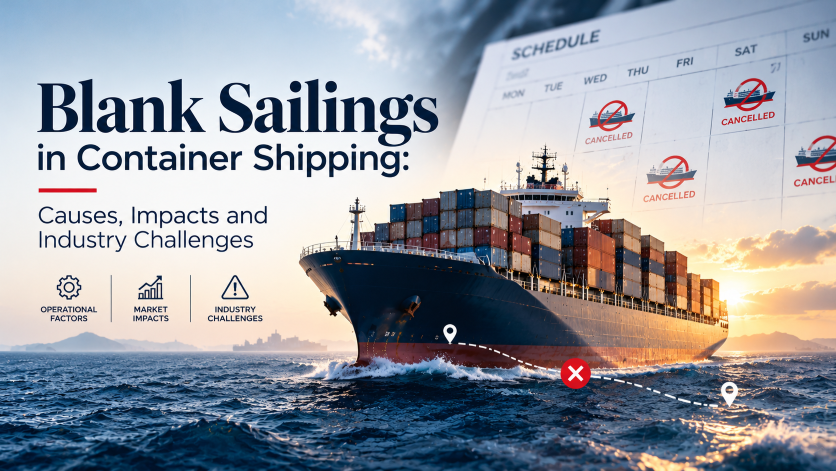
In global container shipping, reliable vessel schedules are essential for moving cargo efficiently across international trade routes. However, shipping lines sometimes cancel scheduled voyages, a practice known as a blank sailing. These cancellations can affect cargo delivery, freight rates, container availability and the wider shipping supply chain.
Understanding blank sailings helps importers, exporters and logistics providers plan shipments, manage equipment requirements and minimise potential disruptions.
What Is a Blank Sailing?
A blank sailing occurs when a shipping line cancels a previously announced vessel voyage, resulting in the cancellation of its planned port calls. Cargo booked on the affected sailing may need to be transferred to another available vessel or service, potentially delaying delivery.
Blank sailings are often used to adjust vessel capacity to changing cargo demand, although operational disruptions and network adjustments can also lead to cancellations.
Why Do Shipping Lines Announce Blank Sailings?
Several factors can lead to blank sailings in the container shipping industry:
Low cargo demand: Carriers may cancel sailings when bookings are insufficient to justify operating the planned capacity.
Seasonal fluctuations: Periods such as Chinese New Year can reduce manufacturing and export activity, affecting demand for vessel space.
Port congestion and delays: Disruptions to vessel schedules may lead carriers to adjust port calls or service rotations.
Fleet redeployment: Shipping lines may move vessels between trade routes to respond to changing demand.
Operational changes: Vessel maintenance and shipping network adjustments may also affect scheduled services.
Blank sailings therefore serve as a capacity-management measure and can also occur as part of wider operational adjustments.
How Do Blank Sailings Impact the Container and Shipping Industry?
1. Cargo Delays and Schedule Disruptions
When a sailing is cancelled, cargo may be rolled over to a later vessel or an alternative service. This can delay deliveries, disrupt production schedules and affect inventory planning.
Importers and exporters may also need to revise warehouse bookings, inland transport arrangements and customer delivery commitments.
2. Changes in Freight Rates
Blank sailings reduce the vessel capacity available on an affected service. If cargo demand remains strong, reduced capacity can put upward pressure on freight rates.
However, freight rates do not always increase. When demand is weak or sufficient capacity remains available, rates may remain stable or decline. The actual effect depends on market conditions, trade routes and available vessel space.
3. Container Availability and Repositioning
Blank sailings can disrupt the movement of loaded and empty containers. Delayed vessel calls may postpone the arrival of equipment needed for subsequent shipments.
Ports that depend on incoming containers for export cargo may experience temporary equipment shortages, while other locations may accumulate empty containers awaiting repositioning. These imbalances can complicate container fleet management and equipment planning.
4. Additional Logistics Costs
Shipment delays or alternative routing may result in additional storage, inland transportation, warehousing or handling expenses. The costs incurred depend on the shipment, the revised arrangements and the applicable contractual terms.
Shipping lines, freight forwarders and cargo owners may also need to devote additional resources to rescheduling shipments and coordinating revised delivery plans.
5. Supply Chain Disruptions
The effects of blank sailings can extend beyond ports and vessels. Delayed raw materials may affect manufacturing, while late finished goods can disrupt distribution and retail replenishment.
This makes shipment visibility, contingency planning and timely communication important for businesses managing international container movements.
How Can Businesses Prepare for Blank Sailings?
Businesses can take several practical steps to reduce the impact of cancelled sailings:
Monitor vessel schedules: Check carrier announcements and booking updates regularly.
Plan shipments early: Allow additional time for cargo with strict delivery deadlines.
Evaluate alternative services: Consider other sailings, carriers or routes where feasible.
Maintain appropriate inventory: Build suitable buffers for critical goods when commercially practical.
Coordinate container requirements: Confirm equipment availability, collection dates and empty-return arrangements.
Communicate proactively: Keep suppliers, customers, freight forwarders and transport partners informed of schedule changes.
These measures can help businesses manage uncertainty, reduce avoidable costs and maintain continuity across their container supply chain.
Conclusion
Blank sailings are an established part of container shipping, allowing carriers to adjust capacity and respond to changing market conditions. However, cancelled voyages can create challenges involving cargo schedules, freight rates, container availability and supply chain planning.
For businesses involved in international trade, understanding these impacts is essential for making informed logistics decisions. Monitoring vessel schedules, planning equipment requirements and maintaining flexible shipping arrangements can help minimise disruption.
VS&B Containers Group supports businesses with container leasing, container buying and selling, and a range of dry and specialised container solutions. Effective container planning can help businesses manage changing equipment requirements and respond more efficiently to shipping disruptions.
VS&B Containers group offers both standard and custom-made containers, delivered directly from the factory to your desired location. With a fleet of over 25,000 containers made available across Asia, Europe, US and Australia, the company helps customers get containers effortlessly from anywhere in the world. If you have unique needs in terms of affordability, adaptability, and potential return on investment, please drop an email to traders@vsnb.com, and the VS&B team will contact you to discuss further.
- Log in to post comments