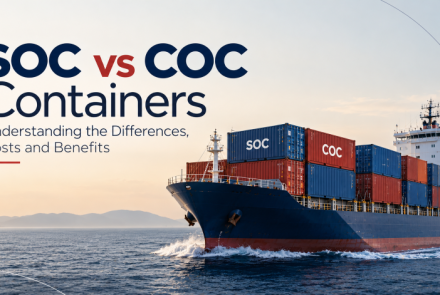

SOC vs COC Containers: Understanding the Differences, Costs and Benefits
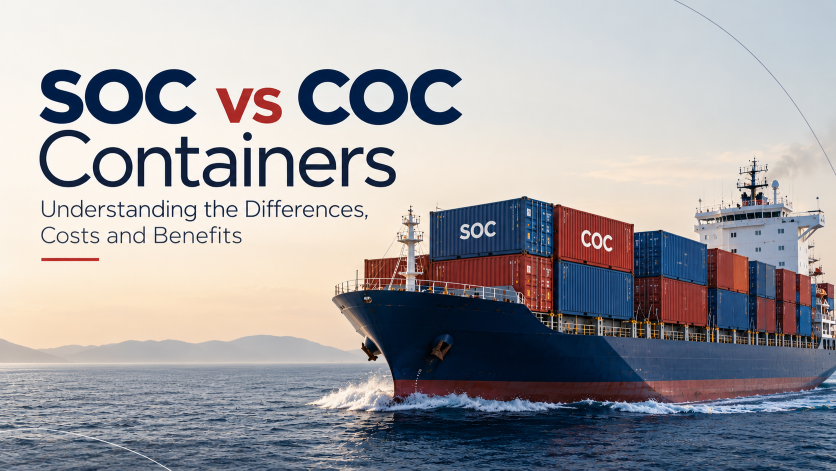
Every container shipment starts with one decision: whose box will it travel in? In container shipping solutions, the two main models are the Shipper-Owned Container (SOC) and the Carrier-Owned Container (COC). The choice affects freight cost, risk and flexibility across your container supply chain.
SOC vs COC at a glance
A SOC is owned or leased by the shipper or consignee. The shipper is fully responsible for the container’s management, maintenance and return. A COC belongs to the shipping line. The carrier supplies the container as part of the booking and arranges all container logistics.
SOC (Shipper-Owned Containers) are owned or independently leased by the shipper or another equipment owner, who is generally responsible for maintenance, storage and other equipment-related costs. They can offer greater control over equipment availability and flexibility to retain or reuse containers after delivery, making them suitable for certain remote destinations, equipment shortages and longer equipment-use periods. Although SOCs generally do not require empty return to the ocean carrier, port or terminal storage charges and other applicable fees may still apply.
COC (Carrier-Owned Containers), on the other hand, are supplied or controlled by the shipping line as part of the carrier's booking arrangement. The carrier generally manages equipment allocation and maintenance, while the customer must return the empty container to the designated depot according to the agreed terms. Equipment costs are generally reflected in the freight arrangement, although additional charges, such as demurrage and detention, may apply when contractual free time is exceeded. COCs are commonly used for standard shipments on established trade routes where equipment is readily available and empty-return facilities are convenient.
SOC vs COC: Which Is More Cost-Effective?
- There is no universal answer to whether SOC or COC containers are cheaper. The better option depends on the route, shipment volume, duration of container use, equipment availability and the total cost of managing the container.
- For a COC, the cost assessment should include the freight quotation, applicable free time, possible demurrage and detention, empty-return transport, and any other charges not included in the quotation.
- For an SOC, the assessment should include the purchase price or lease cost, financing where relevant, inspection and maintenance, insurance where applicable, storage, repositioning and the container's residual or resale value.
When Should Businesses Choose SOC Containers?
SOC containers are suitable when carrier equipment is limited, empty returns are expensive or containers are needed for longer periods. They offer greater flexibility for remote destinations, project cargo and businesses with recurring shipping requirements. Buying or leasing an SOC can also provide better control over equipment availability and reuse.
When Should Businesses Choose COC Containers?
COC containers are ideal for standard shipments on established trade routes where equipment is readily available. They simplify container sourcing and maintenance, making them convenient for businesses with occasional shipments or limited fleet management resources. Competitive freight rates and convenient empty-return facilities can also make COCs a cost-effective option.
SOC Container Requirements: CSC Plates, Inspections and Carrier Approval
Before shipping an SOC container internationally, its owner must ensure that the container meets applicable safety standards, inspection requirements and the shipping line’s acceptance criteria.
- CSC Safety Plate: Verify that the container has valid safety approval under the International Convention for Safe Containers (CSC).
- ACEP and Inspections: Ensure the container complies with the applicable examination requirements, either through an Approved Continuous Examination Programme (ACEP) or periodic examinations.
- Container Condition: Check structural integrity, cargo worthiness and suitability for the intended shipment.
- Documentation and Approval: Provide the container identification details, photographs, CSC plate information and any SOC application required by the carrier.
How to Make the Right SOC vs COC Decision
The most effective way to choose between SOC and COC containers is to evaluate the shipment's commercial, operational and technical requirements together.
- Businesses should start by identifying the origin and destination, cargo type, container size, shipment frequency and expected duration of container use. They should then establish whether suitable carrier equipment is available and whether the destination has a convenient empty-return depot.
- The next step is to compare the full cost of both options, including freight, acquisition or lease expenses, handling, storage, maintenance, repositioning and potential delay charges. For an SOC, the value of retaining or reusing the container should also be considered. For a COC, the agreed free time and return conditions are important parts of the calculation.
- Finally, the business should confirm carrier acceptance, equipment safety and documentation requirements before finalising the booking.
- A well-informed choice can support freight cost optimization, improve equipment utilisation and help businesses maintain more predictable international logistics operations.
Conclusion
SOC and COC containers serve the same fundamental purpose: transporting cargo safely and efficiently through domestic and international supply chains. Their main difference lies in who provides and controls the equipment, how it is managed and what happens after the cargo has been delivered.
- SOC containers can offer greater flexibility over equipment availability, retention and reuse, particularly when container shortages or difficult empty-return arrangements affect a shipment. COC containers can provide a simpler solution for standard shipments where equipment is readily available and the carrier's return network is convenient.
- Neither option is automatically more economical. The right decision depends on the route, cargo, equipment requirements, contractual conditions and total logistics cost.
VS&B Containers Group supports businesses with container-related requirements, including container leasing, container buying and selling, and a range of dry and specialised container solutions. Evaluating equipment requirements alongside the wider transport plan can help businesses select a suitable container solution for their operational needs.
VS&B Containers group offers both standard and custom-made containers, delivered directly from the factory to your desired location. With a fleet of over 25,000 containers made available across Asia, Europe, US and Australia, the company helps customers get containers effortlessly from anywhere in the world. If you have unique needs in terms of affordability, adaptability, and potential return on investment, please drop an email to traders@vsnb.com, and the VS&B team will contact you to discuss further.
- Log in to post comments