
The World's Busiest Shipping Lanes: Engineering Marvels Driving Global Trade - PART 2
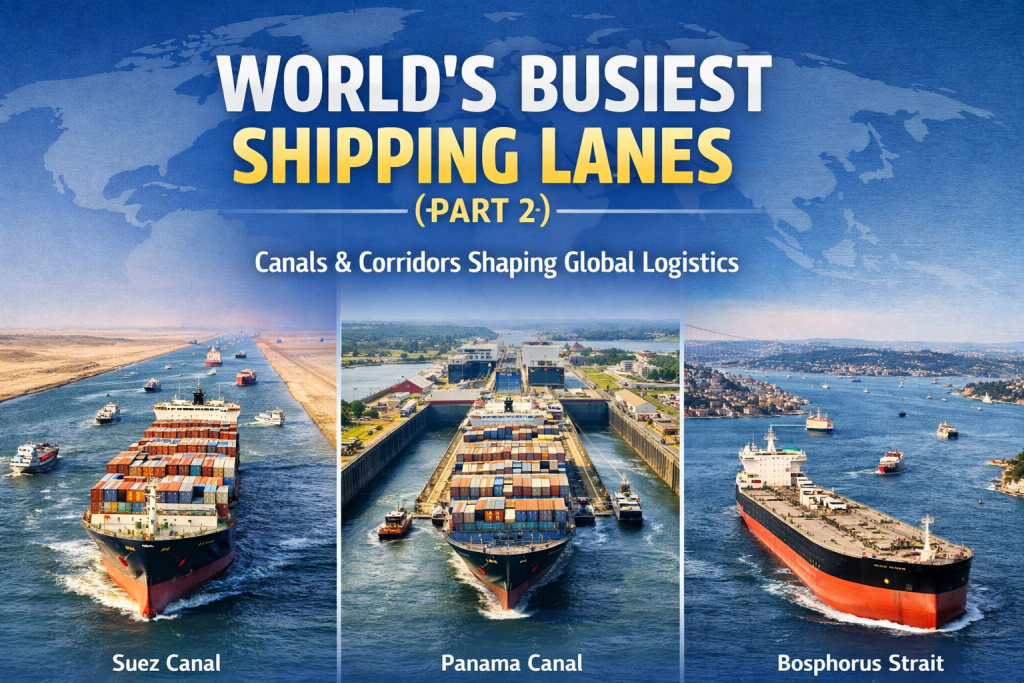
While natural straits dominate global shipping, man-made canals and strategically governed waterways have revolutionised trade routes. These corridors significantly reduce transit time, fuel consumption, and overall logistics costs - making them indispensable to modern container shipping solutions.
In this blog, we explore three such corridors:
Bosphorus Strait: a strategic Eurasian corridor
Suez Canal: the shortcut between Europe and Asia
Panama Canal: connecting the Atlantic and Pacific
1. Bosphorus Strait: A Narrow Passage with Wide Economic Impact
The Bosphorus Strait is one of the world’s narrowest and most complex maritime passages, primarily facilitating regional trade between the Black Sea and global markets.
Cargo & Vessel Movement
Crude oil and petroleum products via tankers
Grain exports from Black Sea regions
Bulk cargo and chemical shipments (including ISO tank containers)
Limited containerized cargo moving through regional trade networks
Logistics Significance
Unlike major container-heavy routes, the Bosphorus is more dominant in bulk and energy transportation. However, it still plays an important role in multimodal logistics and regional containerized cargo management, connecting inland production zones to international shipping lanes.
If Passage Stops: Global Impact
Disruptions in oil and grain exports
Supply shortages affecting global food and energy markets
Increased pressure on alternate logistics routes
Rising costs impacting freight cost optimization and global freight logistics
2. Suez Canal: A Critical Link in the Global Container Network
The Suez Canal is one of the most vital connectors between Asia and Europe, handling approximately 10–12% of global trade and enabling faster maritime transit between major economic regions.
Cargo & Vessel Movement
Large container vessels carrying high cube containers (40’HC, 45’HC, 20’HC)
Oil and LNG tankers
Bulk commodities such as coal, metals, and cement
Containerized cargo, including temperature-sensitive goods transported in reefer containers for lease.
Logistics Significance
The canal is central to container shipping solutions, supporting high-volume international trade containers movement and improving TEU capacity and efficiency across long-haul routes. It also enhances container tracking and monitoring and integrates with advanced port automation and container handling systems.
If Passage Stops: Global Impact
Immediate disruption to Asia–Europe trade routes
Rerouting via longer routes (e.g., around Africa), increasing fuel and transit time
Supply chain bottlenecks affecting manufacturing and retail sectors
Increased costs impacting NVOCC operations and overall container supply chain
3. Panama Canal: Connecting the Americas and Beyond
The Panama Canal is a critical maritime shortcut connecting the Atlantic and Pacific Oceans, significantly reducing travel time for global shipping.
Cargo & Vessel Movement
Container ships (including Neo-Panamax vessels)
Agricultural exports such as grains
LNG and LPG carriers
Project and oversized cargo transported via flat rack containers and open top containers
Logistics Significance
The canal plays a vital role in intermodal transport and domestic container transport, linking ocean routes with inland systems such as containerized rail freight.
If Passage Stops: Global Impact
Longer transit routes around South America
Increased fuel consumption and shipping costs
Delays in agricultural and industrial supply chains
Reduced efficiency in containerized cargo management and global scheduling
Conclusion: Safeguarding Global Trade Efficiency
The Bosphorus Strait, Suez Canal, and Panama Canal play a defining role in shaping global trade efficiency. Each route supports a different mix of cargo—from energy and bulk shipments to high-volume containerized trade - making them essential to the overall balance of global freight movement.
Their biggest strength lies in reducing transit time and costs, but their biggest risk is disruption. Any blockage or delay can quickly impact shipping schedules, increase costs, and strain the container supply chain and global freight logistics network.
VS&B Containers Group understands the importance of these critical corridors and the need to navigate them efficiently. As global trade continues to expand, this understanding remains key to ensuring speed, reliability, and cost efficiency across modern logistics operations.
VS&B Containers group offers both standard and custom-made containers, delivered directly from the factory to your desired location. With a fleet of over 25,000 containers made available across Asia, Europe, US and Australia, the company helps customers get containers effortlessly from anywhere in the world. If you have unique needs in terms of affordability, adaptability, and potential return on investment, please drop an email to traders@vsnb.com, and the VS&B team will contact you to discuss further.
- Log in to post comments